

Ever hosted a party that felt like it was about to flatline? It happens. But picking the right party games for large groups is the quickest way to jolt it back to life, turning a quiet gathering into an unforgettable night of laughter and connection. Think of it as the secret ingredient that melts away the awkwardness and replaces it with awesome shared memories.
Why Great Games Are Your Party’s Secret Weapon
Picture it: a room full of people, but everyone's huddled in their own little cliques. This is where a fantastic game swoops in to save the day. It’s not just an icebreaker; it’s your best tool for getting conversations flowing and knocking down those invisible social walls.
We’re not talking about those games with a rulebook thicker than a novel that just leave people confused. We mean the kind of inclusive, high-energy fun that’s just as good with 10 people as it is with 30.
The whole point is to get everyone in on the action, laughing and mixing it up without the pressure of forced small talk. A well-chosen game gives everyone something to rally around, an instant reason to connect.
From Awkward Silences to Roaring Laughter
Let's be honest, mingling with strangers or that second cousin you haven't seen in a decade can feel like a chore. The right game is a social shortcut.
A great party game gives everyone a shared purpose. Suddenly, you’re not just a group of individuals; you’re a team trying to guess a ridiculous phrase or come up with the most outlandish answer. It instantly unites the room.
This shared experience is incredibly powerful. It replaces stiff handshakes with moments of pure, unadulterated fun, which is a big reason why people are diving back into tabletop games. The hunger for real-life social connection is real. In fact, the global party games market exploded to USD 8.46 billion in 2024, mostly because we're all craving more face-to-face fun after years of staring at screens. You can dig into the numbers in the full market report.
Setting the Stage for an Epic Night
Throughout this guide, we'll walk you through a simple way to pick the perfect game that totally matches your group's vibe. Whether you're planning a big family reunion or a casual game night with friends, having the right activity is everything. If you're planning a get-together for a more mature audience, you might want to check out our guide to funny party games for adults.
Ultimately, party games do more than just pass the time. They build a sense of community. To take your gatherings even further, you can explore various social app resources designed to enhance social interaction. By putting connection and fun at the center of your event, you're setting the stage for a night everyone will be buzzing about for weeks to come.
What Makes a Great Game for a Big Crowd?
Let's be honest, not every game is cut out for party duty. When you've got a dozen or more people ready for some fun, some games just don't make the cut. The secret to an amazing party game isn't a giant board or a mountain of pieces; it’s all in the game’s DNA.
The best ones share a few key traits. They’re designed to keep everyone in the action, kill any downtime, and make people feel like comedy geniuses, even if they’ve never touched a board game before. It's kind of like cooking for a big gathering: you don't stress over making 12 different complicated meals. You make one awesome pot of chili that everyone can dive into and enjoy together.
Mechanics That Keep Everyone Engaged
The absolute number one party killer? Waiting for your turn. When one person is deep in thought and 15 others are checking their phones, the energy just drains from the room. That's why the best large-group games are built around mechanics that get everyone playing at the same time.
Here are the big ones to look for:
- Simultaneous Play: This is the holy grail. Everyone is drawing, writing, or acting all at once. Nobody's left on the sidelines.
- Team Dynamics: Pitting teams against each other is a fantastic way to handle a big crowd. It instantly creates a sense of "us vs. them" (in a friendly way!) and turns potential chaos into organized fun.
- Voting and Judging: In games where the whole group votes on the best answer or drawing, everyone stays invested. Even when it’s not your turn to submit something, you’re still a crucial part of the action.
These mechanics are all about preventing bottlenecks. You want a lively, buzzing room, not a slow, orderly queue.
Need help picking a direction? This handy little decision tree can point you toward the right kind of game based on the vibe you're going for.
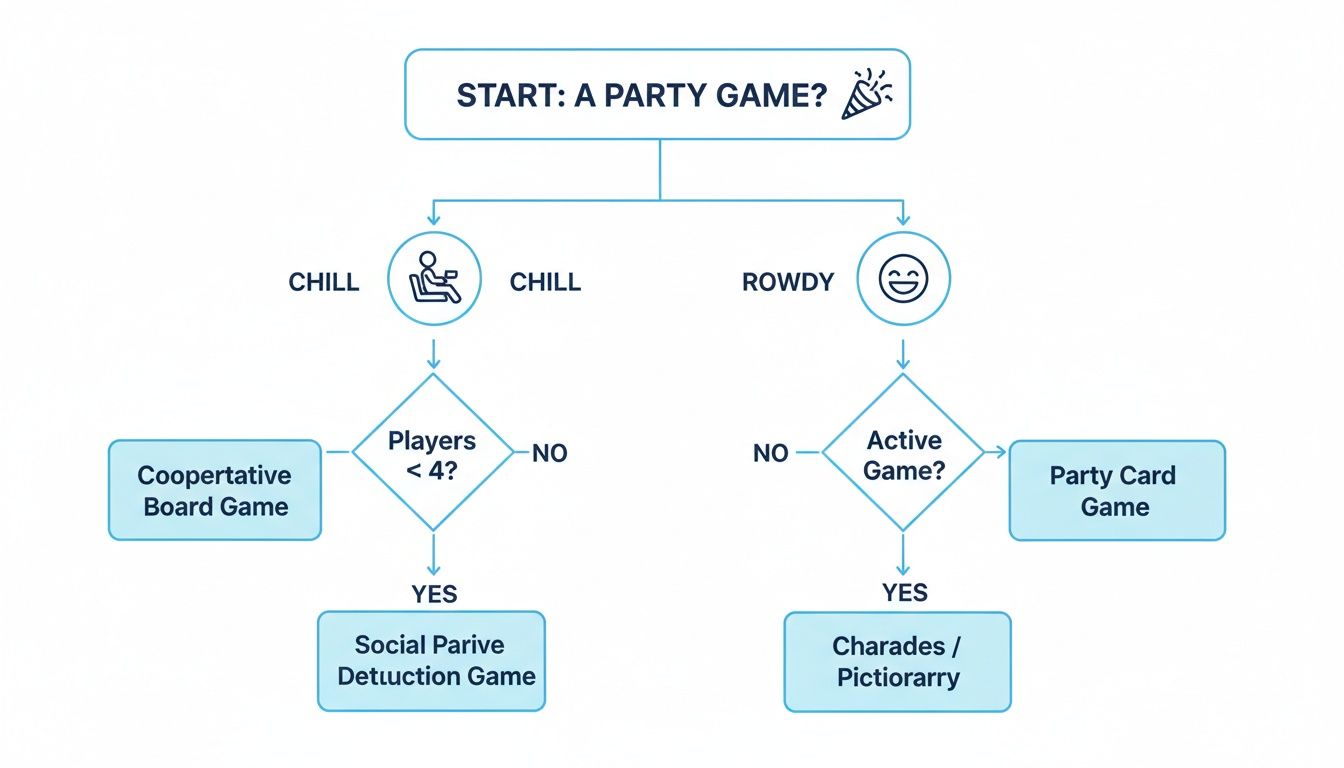
As you can see, it all starts with the mood. From there, you can zero in on the mechanics that will deliver either a chill, laid-back experience or a high-energy blast.
Simplicity Is Your Best Friend
A great party game should feel like an invitation, not an exam. If you need a 20-minute lecture to explain the rules, you’ve already lost half the room. The real goal is to get people playing, not studying a rulebook.
To boil it down, here’s a quick summary of what to look for when you're on the hunt for the perfect game for your next big get-together.
Key Features of Winning Large Group Games
| Feature | Why It's Essential for Large Groups | Game Example |
|---|---|---|
| Simple, Fast Rules | Gets everyone playing within minutes. Crucial for mixed crowds of gamers and non-gamers. | Poetry for Neanderthals |
| Simultaneous Action | Eliminates downtime and keeps energy high. No one is ever just waiting for their turn. | Telestrations |
| Team-Based Play | Manages large player counts effectively and encourages collaboration and friendly rivalries. | Codenames |
| High Scalability | The game works just as well for 8 players as it does for 18, making it incredibly versatile. | Jackbox Games |
| Low Setup Time | You can get the game out and start playing almost immediately, maximizing fun time. | Monikers |
| Focus on Creativity | Puts the spotlight on player humor and cleverness, not on complex strategy, creating memorable moments. | Wavelength |
In short, these features are the building blocks of a game that doesn't just work for a crowd, it thrives with one.
This is especially true when you have a mixed bag of guests. Hardcore gamers playing alongside total newbies? Your nephew playing with his great-aunt? Simple rules level the playing field. It keeps the focus squarely on being creative and having a laugh, not on remembering a bunch of complicated steps. For more ideas on this, check out our guide to some fantastic easy-to-learn board games.
Scalability and Setup Time
Last but not least, you have to think about the practical stuff. A game that’s a blast with eight people should ideally be just as fun with 18. And it shouldn't demand a setup so massive it takes over your entire living room.
Look for games that come with minimal components, or better yet, ones that just need simple things like cards, pencils, and paper. A quick setup and an even quicker cleanup mean more time for the actual fun. The best games are the ones you can grab and start playing within five minutes, no matter how many people showed up. That kind of flexibility is what separates a pretty good game from a legendary one.
Our Top Game Picks for Any Occasion
Alright, let's get to the good stuff. Now that you know what to look for in a great party game for a big crowd, let's talk about some of our absolute favorites.
Picking the right game is really about matching it to the vibe of your get-together. A game that’s a total hit with your rowdy friends on a Saturday night might not be the best choice for a multi-generational family reunion. It’s all about reading the room.
The first step is always to think about who's playing. Are they super competitive? Do they love getting creative? Is it a wild mix of ages? Figuring that out first will steer you right to the perfect box of fun.
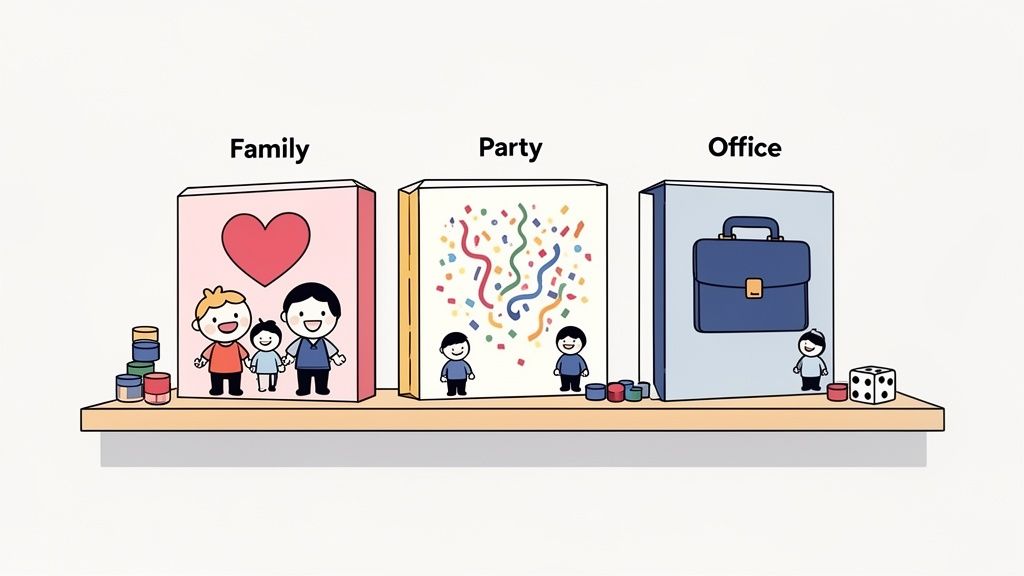
We've split our top recommendations into three classic scenarios: family gatherings, wild game nights with friends, and those sometimes-tricky office parties.
For Family Reunions and Mixed Ages
When you've got everyone from Grandma down to your ten-year-old nephew in the same room, you need a game that’s wholesome, a breeze to learn, and genuinely fun for everybody. The aim here is connection and lighthearted laughs, not cutthroat strategy or edgy jokes.
You’ll want games with universal appeal and straightforward actions. A perfect example is Abducktion. It’s a completely charming game where you use spatial reasoning to beam up ducks into your little UFO. You can teach the rules in about a minute, and seriously, who doesn't love the cute theme? While it supports up to four players, it's brilliant for a team tournament where families can pair up and cheer each other on.
Here’s what makes a family game a winner:
- Simple Rules: If you can explain it in under two minutes, you're good to go.
- Appealing Theme: Animals, space, or food are almost always safe and fun bets.
- Low-Pressure Gameplay: The best games for mixed crowds don't put anyone on the spot or make them feel silly.
- Team Play Potential: Games that easily adapt to teams are fantastic for making sure everyone gets to play.
These are the kinds of games that become the heart of a family get-together, creating awesome memories without leaving anyone out.
For Rowdy Game Nights with Friends
This is your chance to let loose. When it’s just your crew, you can bust out the games with a bit more attitude, inside jokes, and maybe some humor that’s a little more... adult. These games are built for creativity, cleverness, and generating as much gut-busting laughter as possible.
Games like Puns of Anarchy or Ransom Notes are absolute gold for this crowd. They literally hand players the tools to be hilarious. In Ransom Notes, for instance, you're using a random pile of magnetic words to craft responses to absurd prompts. The results are always off-the-wall funny and totally unpredictable. It plays up to six people individually but easily blows up to 20+ by having everyone team up.
The real magic of these games is that they don't require players to be funny on their own. The game itself provides all the funny ingredients; players just get to put them together. This takes all the pressure off and lets everyone feel like a comedic genius.
If you’re hunting for more ideas to get your friends cracking up, we have a ton of great options in our guide to the best party board games for adults. At the end of the day, it's about finding a game that clicks with your group's unique brand of humor.
For Office Parties and Corporate Icebreakers
Let's be real: choosing a game for a work event can feel like walking a tightrope. You need something engaging but not too personal, fun but still professional, and quick enough to squeeze into a lunch break or holiday party. The best party games for corporate settings are all about sparking light, positive interactions.
Venns with Benefits is an outstanding choice here. It’s a team game where players brainstorm to find the common link between three seemingly random words. It’s all about communication, creative thinking, and collaboration, all fantastic skills to flex in a fun, low-stakes way. And because it's focused on words and ideas, it never veers into personal or inappropriate territory.
A successful office icebreaker should check these boxes:
- It's Work-Appropriate: No awkward prompts or overly personal questions.
- It Encourages Teamwork: It should get people talking and working together without feeling forced.
- It's Quick and Simple: The rules should be a snap to explain, and a round should be fast-paced.
- It's Scalable: The game needs to work just as well for a small department as it does for the entire office.
Games like this are amazing for breaking down departmental silos and helping coworkers connect as people, not just as job titles. It's a genuinely effective way to boost morale and inject some real fun into the workday.
Pro Hosting Tips for Maximum Fun
So you’ve picked out the perfect game. That’s a huge win! But let’s be real, your job as the host is just getting started. Choosing the right party games for large groups is step one, but how you host is what separates a pretty good time from a legendary one.
It all comes down to creating a smooth, fun experience where the game can shine and your guests can just relax and have a blast.
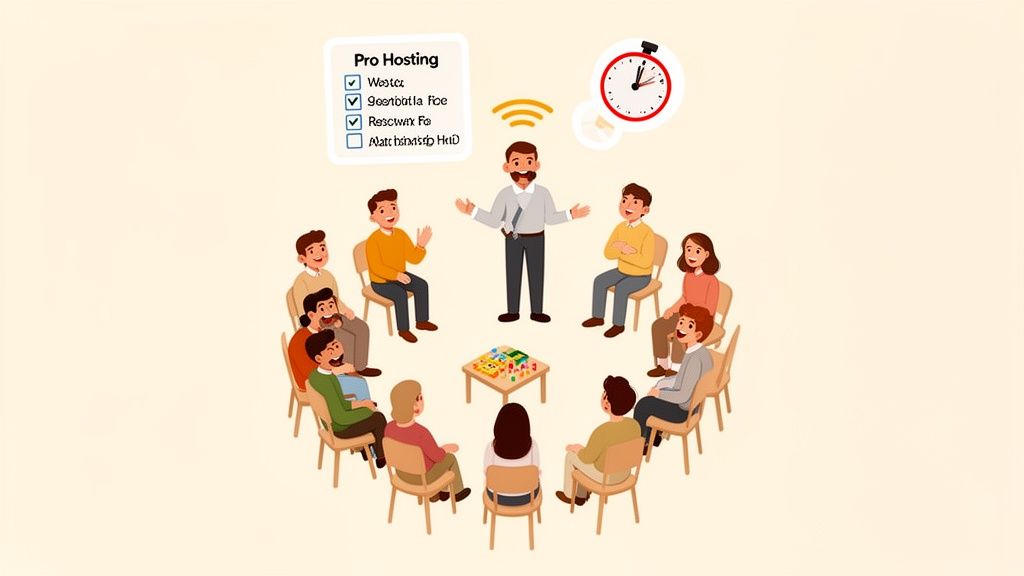
This is your moment to be mission control. A few simple moves can make all the difference, guaranteeing your game night is a hit from the second the first person walks through the door.
Setting the Stage for Success
Before anyone even shows up, take a look at your space. Is it set up for fun, or is it going to be a source of frustration? With a big crowd, good flow and visibility are everything.
Try arranging your seating so everyone can see and hear each other. A big circle or a U-shape works so much better than a long, skinny setup where people at the ends feel disconnected. Also, make sure there are enough surfaces for people to write, draw, or just put their drinks down without causing a disaster.
Your goal is to remove any little friction points that might get in the way of the fun. Think of it like this: you want guests focused on their hilarious answers, not on finding a pen that works or a stable spot for their drink.
This focus on the social experience is why the party game scene in North America is such a powerhouse, generating a massive USD 2.9 billion in revenue in 2024. Publishers in the U.S., a major hub for these games, get it. They know there’s huge demand from game nights and social gatherings, where adult gamers are a huge piece of the puzzle.
The Art of Explaining the Rules
This is where so many great game nights go to die. Nothing sucks the energy out of a room faster than a host droning on, reading directly from the rulebook. Your mission is to be clear, quick, and engaging.
I’ve found a simple formula that works every single time:
- Start with the Goal: First thing's first, tell everyone how to win. Is it about getting the most points? Making the judge laugh the hardest? This gives the rules some much-needed context.
- Do a Demo Round: Don't just explain it, show it. Play one quick, open-hand round so everyone can see the game in action. This "show, don't tell" approach is a game-changer.
- Keep it Under Two Minutes: Seriously. Be brief, be enthusiastic, and then just get people playing. They'll figure out the finer points as they go.
Nail the rules explanation, and you’ve already won half the battle. For an even deeper dive into making your event a smash hit, check out our complete guide on how to host a game night.
Keeping the Fun Fresh and Inclusive
Once the game gets rolling, your job shifts to keeping the momentum going. Be ready to adapt on the fly. Is one particular rule slowing things down or causing confusion? Just change it! House rules are your best friend here. Remember, the goal is maximum fun, not strict adherence to the rulebook.
You could also consider adding some fun, low-stakes prizes. A silly dollar-store trophy or a bag of candy for the winning team can really ramp up the friendly competition and give everyone something to cheer about.
Finally, think about weaving the game into a bigger theme. If you're planning a special celebration, for example, looking into ideas for creating a themed hen night can offer brilliant inspiration. Little details like that are what elevate your get-together from just a game night to a truly memorable occasion.
Why Board Games Are Reclaiming Our Social Time
Let's be honest, we're all a little tired of our screens. In a world of endless pings and notifications, something amazing has started to happen: people are coming back to the table. It’s a quiet, wonderful rebellion against digital overload, and it’s catching on fast.
This isn’t just about feeling nostalgic for childhood classics. Modern party games have become the perfect antidote to digital fatigue. They give us a reason to put our phones down and do something we’re all secretly craving: have some genuine, face-to-face fun.
After all, nothing breaks the ice and gets a room full of people roaring with laughter quite like a good game. It’s a simple, powerful way to connect.
A Powerful Tool for Connection
When was the last time you had a real, belly-laugh moment with a group of friends? I bet it wasn’t while scrolling through a feed. Party games, especially ones designed for big crowds, are incredible at creating those shared moments of pure joy. They have this magical ability to tear down social walls and make a group feel like a team.
This works whether you're trying to get a bunch of coworkers to mingle or just reconnecting with family you haven't seen in ages. A game gives everyone a shared purpose, an instant excuse to talk, scheme, and laugh together.
The real magic of a party game is how it instantly creates a shared experience. It transforms a room of individuals into a single group, all focused on one thing: having a great time. That simple shift is incredibly powerful for building bonds.
A Global Shift Towards Togetherness
This isn't just a hunch; it's a worldwide trend. While people everywhere love tabletop games, some places are seeing an absolute explosion in popularity. Take the Asia Pacific region, for example. It's becoming a huge force in the gaming world, with its party games market expected to hit between USD 1.5 and 1.68 billion in 2024 alone.
A lot of that growth comes from rising incomes and city living in places like China, Japan, and India. As people look for new ways to socialize, party games that are easy to learn and buy online are flying off the shelves. If you're curious about the data, you can find more details about the party games market and see the numbers for yourself.
Building Bridges One Game at a Time
At the end of the day, this comeback is about more than just playing games. It's about taking back our social lives and making space for the kind of playful fun that creates real memories. It’s a simple but effective way to get people talking, working together, and just enjoying being in the same room.
Whether it’s a quick, silly icebreaker or a game that gets the creative juices flowing, these are the moments that make a gathering feel special. If you're on the hunt for more ideas to get your own crew engaged, check out our other post on fun board games for groups. They're a fantastic way to spark the kind of real connection we could all use a bit more of.
Got Questions About Big Group Games? We've Got Answers.
Even when you've picked the perfect game, a few questions always seem to pop up when you're staring down a big guest list. It's totally normal. Getting a dozen or more people on the same page can feel a bit like herding cats, but don't sweat it. We've been there.
Here are some of the most common questions we get about playing games with a crowd, along with some practical, real-world advice to make you feel like a hosting pro. Think of this as your cheat sheet for a smooth, fun-filled game night.
How Do I Teach a Game to a Big, Distracted Group?
This is the big one, isn't it? Getting everyone's attention, especially after a few drinks, can be a real challenge. The secret is to be quick, clear, and most importantly, enthusiastic. Your energy is contagious, so if you're excited, they'll get excited, too.
First, get everyone to quiet down for just a moment. Then, lead with the most important part: the goal. Before you dive into any of the nitty-gritty rules, tell them how to win. "The goal is to make the judge laugh the hardest," is way more engaging than starting with a lecture about scoring.
After that, your best move is a quick demonstration. Instead of reading the rulebook out loud (snooze!), grab a couple of willing volunteers and play one quick turn so everyone can see how it works. A real-life example is worth a thousand words of explanation. Seriously, try to keep your entire rules rundown under two minutes.
Here's a simple battle plan:
- Get Attention: A quick, "Alright everyone, let's get this game started!" usually does the trick.
- State the Goal: "First team to five points wins!"
- Do a Quick Demo: Play one round with a couple of people so the group can see the flow.
- Hand Out Components: Give people their pens, paper, or cards as you explain what they're for.
- Let Teams Huddle: For team-based games, explain the rules once to the whole room, then give teams 30 seconds to huddle up and clarify things amongst themselves.
This approach keeps things moving and respects everyone's attention span, getting you to the fun part faster.
How Can I Adapt a Game for More Players?
So you found an amazing game, but the box says it’s for up to eight players and you've got 15 people on the way. No problem at all. This is where a little creativity makes you a hosting hero.
The easiest and most effective fix is to turn it into a team game. Instead of individual players, just group people into teams of two or three. Each team then acts as a single player, discussing their moves and making decisions together. This is a brilliant fix for creative games like Ransom Notes or Puns of Anarchy, where teams can brainstorm even funnier answers together.
Another great option is to run a tournament. Set up multiple games running at the same time in smaller groups. The winners from each table can then face off in a "champions' round." This adds a fun layer of competition and keeps everyone involved. You can also introduce simple house rules, like having the entire group vote on the best answer instead of relying on a single judge. This keeps way more people engaged on every single turn.
What if My Guests Hate Writing or Drawing?
Totally fair. Not everyone feels comfortable being put on the creative spot. The good news is there are tons of awesome games for large groups that don't require a single doodle or clever sentence.
Look for games that are built on different kinds of interaction.
- Social Deduction Games: Think of classics like Werewolf or Mafia. These games are all about talking, bluffing, and figuring out who’s on your team. It’s pure conversation and psychology, no artistic skills needed.
- Simple Strategy Games: A game like Abducktion is a perfect example. It's about spotting patterns and trying to predict what other players will do. The rules are simple, but the strategy keeps things interesting.
- Voting and Opinion Games: Any game where players vote on prompts or answer simple "would you rather" style questions is a great fit. The fun comes from the discussion and seeing how other people think.
The key is to know your crowd. Having a mix of game types on hand is always a smart move. That way, you can pick something that plays to the strengths and comfort levels of the people in the room.
What Are the Best Icebreakers for a Room Full of Strangers?
When you're bringing together a group of people who don't know each other, the goal is low-pressure, high-laughter fun. You want a game that gets people interacting without forcing awkward small talk or personal questions.
Team-based creative games are your best friend here. The moment you put people on a team, you instantly give them a shared goal and a reason to talk to each other. It breaks down those initial barriers because they’re working together. A game like Venns with Benefits is perfect for this. The focus is on finding silly connections between random words, so players are laughing about the game itself, not feeling self-conscious.
The best icebreakers are about the game, not about the players. They create an environment where the fun of the activity naturally leads to conversation and connection. Before you know it, people who were strangers just an hour ago are high-fiving and laughing like old friends.
Ready to find the perfect game to bring your group together? At Very Special Games, we create laugh-out-loud, easy-to-learn games that are perfect for any crowd. Check out our collection of bestsellers and get ready for an unforgettable game night