
Let’s be real for a second. Nobody wants to spend the first hour of game night with their nose buried in a dense rulebook. The whole point is to connect and have a good laugh, not to feel like you're studying for an exam. This guide is all about finding those incredible, easy to learn board games that get you playing within minutes.
Welcome to Board Gaming Without the Headache
We're ditching the intimidating jargon and complicated strategies. Our goal is to help you find the perfect game for any occasion, whether it’s a chaotic family get-together, a lively party with friends, or even a cozy night in for two. We'll help you find games that make everyone at the table feel clever and included, proving that the best part of gaming is simply the fun you share.
This whole idea of approachable gaming isn't just a niche thing anymore; it's what people are actively looking for. The demand for accessible, fun-first experiences is what's really shaking up the board game world.
The Rise of Easy to Learn Games
It’s not just a hunch, either, the numbers tell the same story. The global board games market rocketed to USD 15.83 billion in 2024, a huge jump in just one year. A lot of that growth is coming from parents searching for screen-free family activities, with around 70% saying they use board games to pull their kids away from devices. North America is a major player here, with casual party games becoming the go-to for game nights and board game cafes. If you're curious about the data, Fortune Business Insights has a great breakdown.
This massive shift proves that players are choosing connection and instant fun over slogging through a complex rulebook. A brilliantly designed game doesn’t have to be difficult to be deep or satisfying.
The best games aren't just "fun," they're engaging. They hit that sweet spot of being just challenging enough to keep you hooked, but not so hard that you get frustrated. It's a rewarding feeling of accomplishment.
Picking the right game is the first, most important step toward creating those unforgettable moments. It’s all about finding that perfect title where the rules fade into the background and let the good times take over. With the right pick, any gathering can turn into an evening of laughter and friendly competition. For more ideas on setting the perfect vibe, check out our guide on how to host a game night.
What Actually Makes a Board Game Easy to Learn?
So, what does "easy to learn" really mean when you're staring at a wall of colorful boxes? Let’s be honest, it’s about more than just a thin rulebook. It’s about how fast a game clicks, that magic moment when you go from confused to having fun. The best easy-to-learn games just feel intuitive, almost like you already know how to play before you even start.
Think about it like this: it's the difference between learning a playground game like tag versus trying to wrap your head around the infield fly rule in baseball. One is natural and you just get it; the other feels like you need a flowchart and a lawyer. An accessible game gets out of its own way so everyone can just start connecting and having a good time.
The Five-Minute Rule
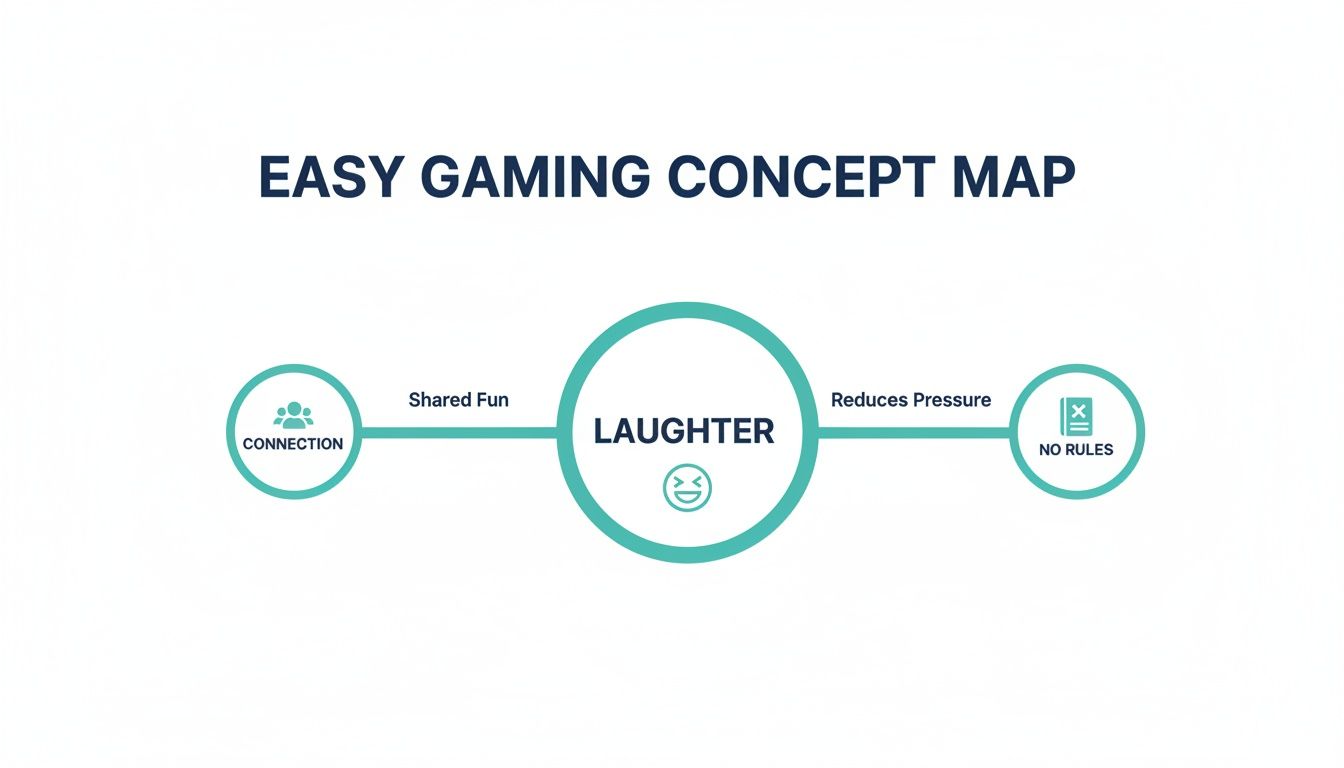
Over the years, I've developed a simple test I call the "Five-Minute Rule." Can you explain the core idea of the game, the main goal and how to win, in under five minutes? If the answer is yes, you've probably found a winner. It means the concept is clear and straightforward, which is the absolute foundation of a game that won't scare new players away.
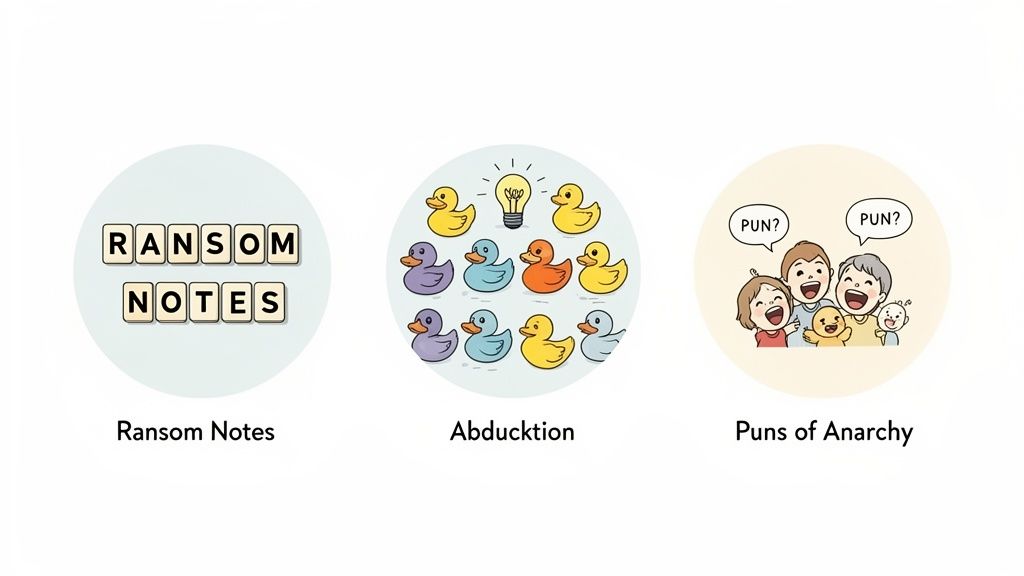
Take a game like Ransom Notes. The concept is dead simple: use a pile of word magnets to cobble together the funniest answer to a silly prompt card. You can explain that in about 30 seconds, and everyone at the table instantly gets it. That's the secret sauce.
A truly accessible board game doesn't ask you to memorize rules; it invites you to play. The best ones have a simple core loop that's instantly gratifying, making every player feel clever and included from the very first turn.
Beyond the Rulebook
While a quick explanation is a huge part of it, a few other things separate the good easy games from the great ones. When I'm looking for a new game to bring to a party or family gathering, I run through a quick mental checklist to see if it fits the bill.
Use this table as a handy guide next time you're shopping for a new game. It'll help you spot the gems that are genuinely a breeze to get to the table.
The 'Easy to Learn' Game Checklist
| Characteristic | What to Look For | Why It Matters |
|---|---|---|
| Quick Setup | Minimal components, simple starting layout. Can you get it on the table in under 2 minutes? | A long setup kills the mood before the game even starts. Quick setup keeps the energy high. |
| Intuitive Actions | On your turn, is it obvious what you're supposed to do? Look for games with one or two clear actions. | Too many choices create "analysis paralysis." Simple turns keep the game moving and less intimidating. |
| Minimal Downtime | Are players engaged even when it's not their turn? | Nobody likes sitting around waiting. Games where you're invested in other players' turns are way more fun. |
| Clear Goal | Is the win condition simple and easy to track? (e.g., first to 10 points, last one standing). | A complicated or abstract goal makes it hard for players to know if they're doing well, which can be frustrating. |
| High Replayability | Does the game feel different each time you play? Look for variable setups or lots of unique cards. | The game should feel fresh and fun the tenth time you play it, not just the first. |
Ultimately, a great easy-to-learn game respects your time. It understands that game night is about playing and laughing, not studying a manual. By keeping an eye out for these key ingredients, you can confidently pick a game that will be an instant hit with any group, guaranteeing your next get-together is filled with a lot more fun and a lot less head-scratching.
How to Pick the Perfect Game for Your Group
Choosing the right game is really all about reading the room. A game that’s a total hit with your loud party friends might completely bomb during a quiet holiday gathering with the in-laws. The real trick is to match the game's energy to the group's personality.
Think of yourself as a game night DJ. You wouldn't spin the same tracks at a wedding, a kid's birthday, and a chill hangout, right? Every crowd has a different vibe, and your game choice needs to reflect that. The goal is to pick something that gets everyone comfortable and excited to play.
Consider Your Player Count and Time
First things first, let's get the logistics out of the way. How many people are you playing with, and how much time do you have? A game built for 2-4 players is obviously a non-starter for a party of eight, and a two-hour epic won't work if you only have 30 minutes to spare.
-
For small groups or couples: You want something with some clever back-and-forth. A witty word game like Venns with Benefits is perfect here, as it really gets the conversation and inside jokes flowing, even with just two people.
-
For medium-sized family gatherings: The key is finding a game that works for a mix of ages and experience levels. Abducktion is a fantastic choice, with its colorful ducks, simple strategy, and a fun theme that appeals to kids and grown-ups alike.
-
For big, lively parties: Go for maximum chaos and laughter. A game like Puns of Anarchy really comes alive with a big crowd, more players just means more ridiculously funny answers.
Match the Game to the Group's Vibe
Okay, now think about your group's personality. Are they super competitive, or would they rather work together? Are they the creative, silly type, or do they like to dig into a bit of strategy?
The best game nights happen when the game itself clicks with the group's natural dynamic. A cooperative game can pull a quiet group out of their shells, while a competitive one can channel a rowdy crowd's energy.
Figuring this out helps you pick a game that feels like it was made for them. You want to set your friends and family up to have a good time, and choosing the right style of game is a massive part of that. If you're looking for more specific ideas, our guide on fun board games for groups is a fantastic resource.
The board game world is absolutely booming right now, and a big reason is that designers are finally making more games for these kinds of social moments. The market is expected to reach a staggering USD 41.07 billion by 2029, and simple, clever adult-oriented games are already driving 49.3% of that revenue. It’s no surprise, really. After 2020, 60% of new gamers said "easy rules" were what drew them in, proving that people just want to open a box and start playing.
By just taking a second to think about who's at the table and what kind of fun they're looking for, you can pick easy to learn board games that are guaranteed to be a hit. You'll become the hero of game night, every single time.
Teaching a New Game Without Boring Your Friends
So, you did it. You found the perfect game, brought it to the party, and now everyone's staring at you. This is the make-or-break moment. It's when game night either becomes legendary or fizzles out with a chorus of confused sighs and glazed-over eyes. No pressure, right?
Don't sweat it. Teaching a new game doesn't have to feel like you're administering a final exam. The absolute worst thing you can do is crack open the rulebook and start reading it aloud, word for agonizing word. Your real job is to get everyone to the fun part as quickly as possible. Think of it like telling a short, exciting story.
Start With the "Why," Not the "How"
Before you get into the weeds of how to take a turn, tell everyone the main goal. What are they actually trying to do? Is the point to rack up the most points, be the last person standing, or build the silliest sentence? Starting with the objective gives everyone a simple, clear purpose to hang all the other rules on.
For instance, when I teach Tiny Laser Heist, I don't kick things off with movement rules. I start with, "Okay, our goal is to be the first team of tiny thieves to swipe three priceless gems from this museum." Boom. Instantly, everyone gets it. Now, every rule I explain next has a reason to exist.
A game is a system where players engage in an artificial conflict, defined by rules, that results in a quantifiable outcome. When you teach, start with that outcome, the winning condition, to give everyone a reason to care about the rules that follow.
This approach hooks people from the get-go. They're already scheming and getting into the spirit of the game before you've even dealt a single card.
Show, Don't Just Tell
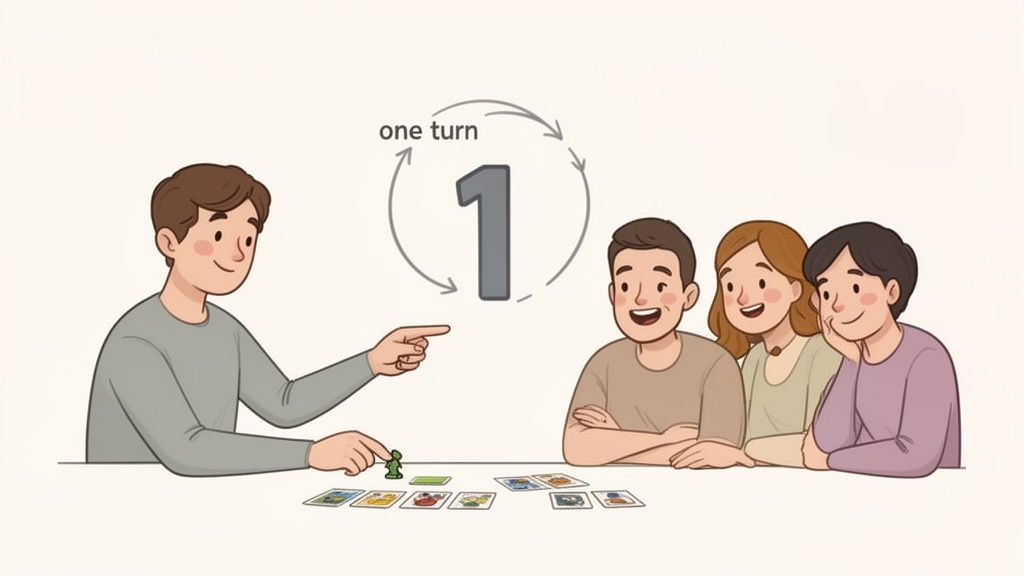
Once everyone knows the goal, it’s time to show them a complete turn. Don't just list the options a player has on their turn; physically walk them through one. Pick up the pieces, move the cards, and talk through what you're doing and why.
This hands-on method works wonders. It transforms a boring lecture into a mini-tutorial and gives people a chance to ask questions as they pop up. It’s a much more natural way to learn.
Here’s a simple formula that almost never fails:
- State the Big Goal: Tell them how to win in one or two sentences.
- Explain Key Components: Quickly point out the most important bits on the table, like the board, the dice, or the main cards.
- Walk Through One Turn: Take a sample turn yourself, explaining each step as you do it.
- Start Playing: Seriously, just jump in. You can handle the fiddly rules and weird edge cases as they come up during the actual game.
This whole process keeps the energy high and shows you respect everyone's time. For games with a really quick setup, you can even lean on short videos to get the gist, like these video instructions for Tiny Laser Heist. By building momentum from the very start, you make sure your easy to learn board games actually feel easy for everyone at the table.
Our Favorite Examples of Easy to Learn Games
Alright, enough with the theory. Let's get to the fun part and look at some games that really get it right. To show you what makes a truly great easy to learn board game, we’re going to pull a few examples that just nail the balance of simplicity and fun. We won't just list off features; we'll talk about the feeling you get when you play them.
This is all about the experience, the connections you make and the laughs you share. We'll show you exactly why these games are such a hit with brand-new players, seasoned gamers, and everyone in between.
For Pure Chaotic Laughter: Ransom Notes
If you're looking for a game that practically guarantees side-splitting, can't-breathe laughter, Ransom Notes is it. The concept couldn't be simpler: you get a pile of random word magnets and have to piece together the funniest or weirdest response to a prompt card.
The real magic is in the creative chaos. You’re not just answering a question; you’re wrestling a ridiculous sentence into existence from a jumble of often useless words. That limitation is what sparks the comedy, forcing everyone to get inventive and leading to some truly unforgettable (and often unhinged) answers.
It’s the perfect party game because there's absolutely zero pressure. Sometimes, the worse your word options are, the funnier your response ends up being.
For That Satisfying 'Aha!' Moment: Abducktion
Abducktion is one of those games that just makes you feel brilliant. It's a vibrant, colorful puzzle where the goal is to arrange your ducks in a specific pattern from a secret card, all while trying to figure out what your opponents are up to.
The core of the game is that perfect "aha!" moment when you slide a duck into place and your whole plan clicks together. The basic movement rules are simple enough for a kid to pick up in minutes, but the spatial puzzle offers a surprisingly satisfying challenge for adults.
This game hits that sweet spot for family game nights. It’s thinky without being a brain-burner, and the high-quality, chunky duck pieces are just a joy to handle. When you're looking at games, you'll often find that even the simplest ones have really well-made game card components, which can be a whole fascinating world of its own for enthusiasts.
Why Simple Designs Win Players Over
The success of games like these is no accident. They tap directly into what most people want from a game night: quick fun without a huge upfront investment of time and brainpower. Think about it, studies show that a staggering 75% of casual players will just walk away from a game if the rules are too complicated.
This is a huge reason why board game cafes, which saw a 25% jump in popularity after 2022, stock their shelves with games that can be taught in under ten minutes.
The best easy to learn games don't just simplify the rules; they amplify the fun. They remove the barriers to entry so that the focus stays on player interaction, creativity, and shared laughter.
These games prove you don't need a 30-page rulebook to create a deep or memorable experience. By focusing on a strong, simple idea, they make game night fun and accessible for absolutely everyone at the table. For a few more ideas, you should check out our guide on the best board games for game night.
A Few More Questions We Hear All The Time
Still have a couple of things you're wondering about? That's totally normal. Diving into modern board games for the first time can feel like you're trying to learn a whole new language. We've put together answers to the most common questions we get from people looking for easy to learn board games.
Think of this as your personal cheat sheet. From finding a game that actually works for a huge group to finally convincing your family there's more to life than Monopoly, we've got you covered.
What’s the Best Game for a Huge Party?
For a big, loud party, you need something that feeds off that chaotic energy. The goal is to find games with almost no downtime, rules you can explain in 30 seconds, and a ton of player interaction. This is where humor-based games like Ransom Notes or Puns of Anarchy really shine.
What makes them so good for a crowd? The fun actually multiplies with more people. Their setup is beautifully simple: one person is the judge, and everyone else throws in their best (or worst) answer. It’s a formula that keeps everyone laughing and paying attention, even when it’s not their turn.
Are Easy to Learn Games Boring for Experienced Gamers?
Not a chance! In fact, most serious gamers I know have a soft spot for a well-designed "gateway" game. The best of these follow that old saying: "a minute to learn, a lifetime to master." The rules might be straightforward, but the strategy and player dynamics can be surprisingly deep.
The real magic of a great simple game is that it puts everyone on equal footing. Success isn't about memorizing a thick rulebook; it's about being clever, creative, or just plain witty in the moment.
Take a game like Abducktion, for example. It has light strategic decisions that a veteran gamer can sink their teeth into, while a word game like Venns with Benefits rewards you for being a quick thinker. They're the perfect way to get everyone to the same table. If you want more ideas, our list of the best family board games is packed with titles that bridge this gap beautifully.
How Do I Get My Family to Try a New Game?
The trick is to pitch it as a quick, fun activity, not a huge time commitment that's going to swallow the whole evening. Pick a game that promises laughs over complex strategy. Sometimes it even helps to choose something with a familiar feel, like card-based gameplay, which can act as a bridge from the classics to something new.
Your mission is to create just one positive memory. Try saying something like, "Hey, let's give this a shot. It only takes about 20 minutes and it looks hilarious." Once they have fun with that first game, they'll be far more open to trying the next one.
Where’s the Best Place to Buy These Games?
You can find games at big box stores, of course, but going straight to the source, the creators themselves, is often your best bet for finding a thoughtful, curated collection. Independent studios are obsessed with making these kinds of games, so you can trust they've been designed from the ground up to be fun and accessible. Besides, you get to support the actual people who dream up these awesome experiences.
Here at Very Special Games, our whole world revolves around creating laugh-out-loud funny, endlessly replayable, and easy to learn board games that make any get-together an event to remember. Find your next game night favorite right here at https://www.veryspecialgames.com.